Iran: Internet deliberately shut down during killings
Amnesty International | November 16, 2020
Iran: Internet deliberately shut down during November 2019 killings
The Iranian authorities deliberately shut down the internet during nationwide protests in November 2019, hiding the true scale of unlawful killings by security forces, Amnesty International said today.
On the anniversary of the deadliest day of the protests, Amnesty International is launching a new microsite, A web of impunity: The killings Iran’s internet shutdown hid, documenting how the lethal crackdown that left at least 304 people dead was hidden from the world.
“When news of the deadly crackdown began to emerge from Iran last November, the world was shocked by the brutal violence of the security forces. The authorities deliberately blocked internet access inside Iran, hiding the true extent of the horrendous human rights violations that they were carrying out across the country,” said Diana Eltahawy, Deputy Regional Director for the Middle East and North Africa at Amnesty International.
“The government thought they could silence the population by taking the country offline, but the Iranian people were determined to tell the world the truth. Our new website is a tribute to the courage of everyone who captured on camera the scenes of violence that the authorities wanted to keep hidden.”
The authorities deliberately blocked internet access inside Iran, hiding the true extent of the horrendous human rights violations that they were carrying out across the country
Diana Eltahawy
The microsite – a joint investigation between Amnesty International and The Hertie School, in partnership with the Internet Outage Detection and Analysis (IODA) project – features more than 100 verified videos from 31 cities, and reveals the repeated use of firearms, water cannons and tear gas by Iran’s security forces against unarmed protesters and bystanders.
To date, no one has been criminally investigated or held accountable for the killings. Amnesty International is again calling on member states of the United Nations Human Rights Council to mandate an inquiry into the unlawful killings to ensure those responsible for ordering, planning and carrying out the crimes are brought to justice in fair trials.
Protest crackdown and internet blackout
On 15 November 2019, protests erupted across Iran following a government announcement of a significant increase in the price of fuel. During the five days of protests that followed, security forces killed at least 304 men, women and children. The victims were mostly killed with shots to the head or torso, indicating security forces were operating a shoot-to-kill policy. The real number of deaths is believed to be much higher, but the ongoing cover-up by Iranian authorities means the true death toll may never be known.
On 16 November, authorities started to shut down the country’s internet. Amnesty International’s research shows that day was also the deadliest of the protests, with at least 100 protesters and bystanders killed.
As protests intensified, the Iranian authorities implemented a near-total internet blackout by ordering different internet service providers (ISPs) to shut down. IODA observed steady drops in signals, which started when cellular operators were ordered to disconnect around 2pm local time on 16 November. By 7pm, Iran had descended into digital darkness.
Iran’s domestic internet remained online, allowing activities such as government services and banking to continue, which minimized financial losses in the country’s economy. It was only around five days later, at approximately 10am on 21 November, that internet access began to be restored. It did not completely return until 27 November.
Internet shutdowns and human rights
A shutdown happens when a state or another actor intentionally disrupts the internet for a specific population, or within a specific region. Shutdowns take a variety of forms. Authorities may slow down the internet to make access difficult, or they may order ISPs to shut down services completely.
The UN Human Rights Committee has declared that “states…must not block or hinder internet connectivity in relation to peaceful assemblies”. However, many states have increasingly used internet shutdowns as a tool to stifle or silence dissent in recent years, particularly when faced with protests or uprisings.
Access to the internet is essential to protect human rights, especially in times of protest
Sam Dubberley
Since the November 2019 protests, internet access in Iran has been disrupted on several occasions during further protests. Organizing peaceful protests, speaking openly against state policies, and documenting human rights violations all heavily rely on the ability to access the internet, and are protected under international human rights law.
Today, Amnesty International is also joining the #KeepItOn coalition, a partnership of more than 220 organizations campaigning against internet shutdowns.
“Access to the internet is essential to protect human rights, especially in times of protest. The Iranian authorities must commit to never again taking the country offline, and must respect the right to peaceful protest,” said Sam Dubberley, Head of Amnesty International’s Crisis Evidence Lab.
Uncovering the hidden killings
Amnesty International first documented the use of lethal force against protesters in the days after the crackdown began, and recorded the details of at least 304 people killed in an investigation published in May 2020.
The organization verified the deaths by collating evidence from videos and photographs, death and burial certificates, accounts from eyewitnesses, victims’ relatives, and friends and acquaintances on the ground, as well as information collected by human rights activists and journalists.
Further research by Amnesty International’s Digital Verification Corps found that in the vast majority of cases across the country, there was no evidence that protesters posed an imminent threat to life or threat of serious injury. As such, the intentional lethal use of firearms by the authorities was completely unwarranted and unlawful.
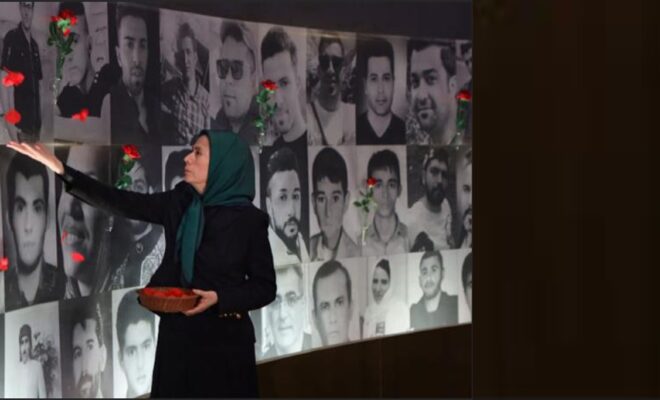
Key data that Amnesty International has gathered is published on the microsite, including pictures of victims and details related to their cause and place of death, and can be downloaded in both English and Farsi.
Amnesty International is again calling on the Iranian authorities to ensure that independent and impartial criminal investigations are conducted into every death during the November 2019 protests, as the first step towards ending impunity.