Don’t impose another Persian dictatoron a multinational Iran
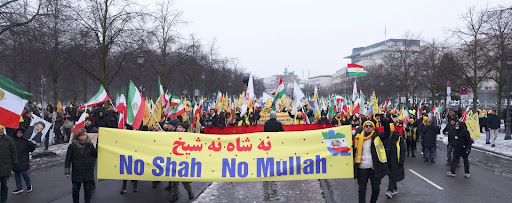
Reza Pahlavi is not a unifying figure, but remains a symbol of exclusion.
A spent force, he is irrelevant to Iran’s future and unqualified to lead.
The Jerusalem Post | By Loqman Radpey | JANUARY 11, 2026
As Iran edges closer to possible collapse amid renewed nationwide protests – particularly in Awdanan, Malekshahi (Ilam), Kirmashan, and Luristan in Eastern Kurdistan – international conversations are turning to what might replace Supreme Leader Ali Khamenei.
Western powers – especially the United States and Europe – fear a power vacuum reminiscent of post-Saddam Iraq or post-occupation Afghanistan. But in their rush to prevent chaos, some think tanks and mainstream media risk endorsing another failed model: a centralized, Persian-centered state structure under a new name that has already proven repressive and unsustainable.
Since 1979, Iran has been governed through a Perso-Shi’ite ideological system. But the marginalization of non-Persian nations within its borders predates the Islamic Republic. The 1935 renaming of “Persia” to “Iran” was more than cosmetic – it was an assertion of a false, homogenized national identity. That change marked the beginning of a modern imperial strategy aimed at erasing the country’s multinational reality under the illusion of unity. It initiated a long-standing policy of suppression, executions, and forced assimilation, denying national, ethnic, and religious groups their cultural and political rights.
From the Pahlavi monarchy to the current theocracy, Persians have monopolized power, the military, and economic institutions while suppressing minorities seeking recognition, language rights, and political autonomy. Farsi was imposed as the sole official language. Shi’a Islam became the ideological foundation of the state. National and ethnic groups – including Kurds, Baluchis, Azeris, Arabs, Turkmens, Qashqais, Armenians, Gilakis, Tabaris, and Talyshis – as well as religious minorities such as Christians, Jews, and Baha’is, were excluded, persecuted, or violently repressed. The Islamic Republic did not break with Pahlavi chauvinism; it perfected it. The current regime has extended and even refined the ethno-nationalist policies of Reza Khan, the Shah, and his son, Mohammad Reza Pahlavi.
THE WEST cannot continue to treat Iran as synonymous with “Persian.” Iran is a state composed of many nations and ethnic groups, each with its own language, culture, and political will. Yet Western policymakers – along with much of the Iranian diaspora – default to a Persian-centric framework. Exiled elites often self-identify as “Persian” abroad, but when confronted with questions about Kurdish or Baloch rights, they invoke the slogan “We are all Iranian.” This is not a call for unity; it is a rhetorical sleight of hand that conceals decades of domination and cultural erasure.
Is Reza Pahlavi unqualified to lead Iran?
Proposals to restore the monarchy through Reza Pahlavi are not solutions; they are a return to failure. During the 2022–2023 Jina uprising, Pahlavi failed to lead or inspire, particularly among non-Persian groups. Former US Secretary of State Mike Pompeo publicly highlighted reported ties between Pahlavi’s supporters and the Islamic Revolutionary Guard Corps, further damaging his credibility. Even at its peak, the Vekalat Midaham (“I give my mandate”) campaign barely exceeded 400,000 signatures. Though recently reactivated, it underscores his political irrelevance.
Pahlavi is not a unifying figure, but remains a symbol of exclusion. A spent force, he is irrelevant to Iran’s future and unqualified to lead.
A meaningful transition after the Islamic Republic cannot default to Persian nationalism under a new label. Doing so would merely perpetuate the very systems that fueled decades of unrest. Stability will not come from resurrecting the past. It must come from a framework grounded in decentralization and inclusion, recognizing the rights of Iran’s nations to self-determination – including territorial autonomy or independence where demanded. These rights must be part of the post-Islamic Republic roadmap and order.
THE ILLUSION of national unity has cost Iran its future. Kurdish, Baloch, Ahwazi Arab, and other movements have long advocated democratic solutions grounded in local governance, cultural rights, and international engagement. Their voices must not be sidelined again in the name of imposed “stability.”
The international community must understand a fundamental reality: Iran is not a nation-state. It is a state of many nations and ethnicities – a nations-state. What is needed now is not the restoration of monarchy, but recognition of difference. The West must not trade one dictatorship for another, nor repeat the mistake of prioritizing top-down control over justice. Stability will not come from resurrecting a failed, British-imposed, Persian-dominated system.
Despite strong nationalist movements, non-Persian peoples were historically denied any path to self-determination, as Britain prioritized the territorial integrity of Persia – later Iran – under the Anglo-Persian Treaty of August 9, 1919, to secure control over land, customs, and oil resources. That legacy of imposed unity continues to haunt the present.
Supporting a truly inclusive post-regime vision requires abandoning the myth of a unified Persian Iran and embracing self-determination, justice, and the country’s multinational reality. Only then can any future government earn legitimacy among its peoples.
The Middle East must move forward – not backward – by rejecting imposed solutions that ignore realities on the ground.
https://www.jpost.com/opinion/article-8827