The Israel-Iran Ceasefire is a Lie
National Security Journal | Andrew Latham | July 4, 2025
Key Points and Summary on Iran’s Nuclear Program and Israel – The recent ceasefire between Israel and Iran is a dangerous illusion—a temporary pause, not a resolution.
-Israel’s “Operation Rising Lion,” which successfully degraded Iran’s nuclear infrastructure, has set back Tehran’s breakout time but has not ended its nuclear ambitions.
For years, Israel’s strategy has been one of erosion. Sabotage, airstrikes, assassinations, cyber intrusions—carefully timed and calibrated to keep Iran’s nuclear program off balance, without sparking full-scale war. It’s not elegant, but it has worked—at least insofar as it has bought time. Time, however, is not a strategy. And even as this approach has proven tactically effective, it’s also become strategically brittle.
The Iranian regime has adapted. Its nuclear infrastructure is deeper, more dispersed, and more difficult to target than it was a decade ago. Its scientists have gotten better at repairing what’s been damaged. Its missile program has advanced alongside its enrichment capacity. In short, Iran has been preparing for this kind of war—because it has known, from the beginning, that it was already in one.
The U.S., by contrast, continues to posture as though a diplomatic solution is just over the horizon. It isn’t. The JCPOA is dead. Not sleeping. Not stalled. Dead. The Iranians violated it. Trump torched it. And the Biden administration, despite its gestures, has done nothing meaningful to bring it back. Iran has moved on. The West pretends otherwise.
And while Washington dithers, Israel acts. Not recklessly, but with increasing boldness. The most recent attacks on Iran’s facilities weren’t shots across the bow—they were precision strikes deep inside the hull. They signal a growing willingness to escalate, not because Israel wants war, but because it refuses to live in a world where Iran crosses the threshold. That line isn’t rhetorical. It’s real. And it’s being enforced.
Which brings us to the present moment—a kind of intermission, but one heavy with foreboding. Tehran is weighing its options. Its leadership is fractured, its economy under pressure, its proxies bruised. But it also sees opportunity. It sees an American administration reluctant to engage, cautious about escalation, preoccupied with Russia, distracted by China. It sees Israeli actions growing bolder, but still constrained by a desire not to provoke an all-out regional war. And it sees the calendar.
As Trump returned to the presidency, Iran knew the game had changed. His first term was many things, but it was not ambiguous. He killed Soleimani. He tore up the JCPOA. He backed Israeli strikes without blinking. He won’t hesitate. He may not want a long war, but he’s not afraid to hit hard. If Tehran wants to make a move, it knows it has a window—and that window may close abruptly in January.
So, the danger is not theoretical. It’s imminent. If Iran calculates that now is the moment to sprint for the bomb, hoping to finish before the political winds shift, it will force Israel—and possibly the U.S.—into a war they’ve both tried to manage their way around. Not because anyone wants that war, but because the logic of deterrence, if not backed by action, eventually collapses.
And what of the United States? For two decades, its position has been to oppose a nuclear Iran, but not quite enough to stop it. It has threatened war, but never followed through. It has negotiated, but never enforced. It has outsourced its red line to Israel while refusing to say so out loud. That posture might work in a world where delay is enough. But delay is running out.
There are only two real options left: accept a nuclear-threshold Iran, or take steps—real, visible, and risky—to prevent it. Pretending there’s a middle ground between those two poles is no longer serious. The middle ground is gone. And if the United States won’t decide, Israel will. That’s not speculation. It’s how this conflict has functioned for years.
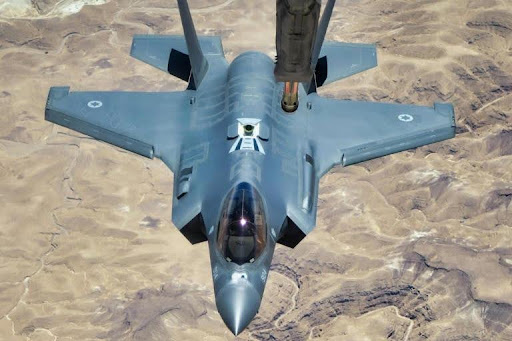
The most recent intelligence confirms what some already knew: Israel’s capabilities are more advanced than many assumed. Its intelligence networks are operating freely within Iran. Its air force can reach hardened targets. Its cyber tools are evolving. And its political leadership—despite the chaos—remains united on this issue. No government in Israel, no matter who leads it, will allow Iran to cross the line.
The United States can either prepare for that reality or be surprised by it. But it can no longer pretend it’s not coming.
There is no peace deal waiting in the wings. There is no new framework about to be unveiled. There is, instead, a long shadow war that’s now brushing up against the edge of daylight. The ceasefire changed nothing. The attacks keep coming. The clock keeps ticking. And sooner or later, one side is going to move too far, too fast, and trigger the very conflagration they’ve each been trying to postpone.
But that’s how wars like this begin—not with formal declarations, but with assumptions that prove false, and red lines crossed by degrees. The question isn’t whether this war will come. It’s whether we’ll admit that it’s already begun.