Time for West to Recognize Iran’s Democratic Alternative
NEWS MAX | Ivan Sascha Sheehan | Tue, June 30, 2026
Why do Major Western Governments Persist in Soft Dealings, Negotiations with a Criminal Regime on the Brink of Defeat?
Over the past eight years, the Iranian people have staged four separate uprisings against the theocratic dictatorship that has been ruling their country since 1979.
Each incident has met with ever more brutal repression than the one that preceded it, and in January of this year, thousands of protesters were killed across the country in mass shootings spearheaded by the Islamic Revolutionary Guard Corps (IRGC).
In spite of all of this, public activism and explicit calls for regime change persist in the Islamic Republic, and since the January uprising, a network of “Resistance Units” has staged hundreds of operations challenging the IRGC and demonstrating its readiness to help implement the ten-point plan authored by Resistance leader Maryam Rajavi.
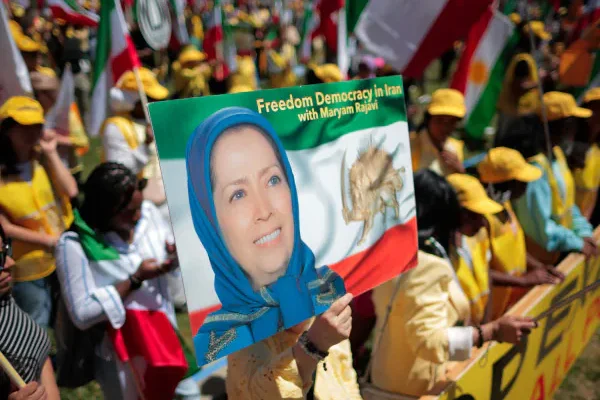
Last Saturday, Mrs. Rajavi delivered the keynote address at a global summit hosted by the National Council of Resistance of Iran at its headquarters outside Paris.
In it, she described the regime as having reached its “last stop” with the appointment of Mojtaba Khamenei as its new supreme leader, following the death of his father at the start of U.S. military operations that aimed to curtail the regime’s ambitions for nuclear weapons capability.
Following the confirmation of Ali Khamenei’s death on Feb. 28, the NCRI announced the formation of a provisional government that will be tasked with implementing Rajavi’s plan and overseeing the country’s first free and fair elections.
Since then, Resistance Units have further closed ranks to begin the development of a “National Liberation Army” that is poised to defend this new, democratic regime.
All of this speaks to the clear viability of the Resistance movement – something that has long been recognized by a politically diverse array of Western policymakers, thousands of whom have formally endorsed the NCRI, the ten-point plan, and Mrs. Rajavi’s prospective leadership.
Yet, all of this has somehow been overlooked by the current leaders of major Western governments, which persist in soft dealings and negotiations with a criminal regime that is on the brink of defeat.
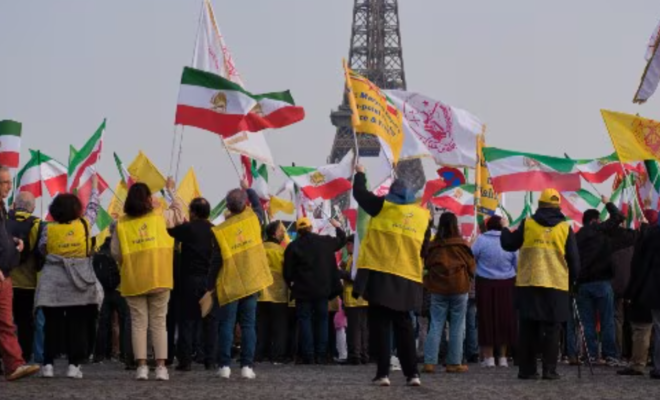
On the same day the NCRI held its summit, approximately 50,000 Iranian expatriates, who had come in more than 800 buses, from across Europe held impromptu demonstrations at several locations in the French capital, after plans for an NCRI-led rally at Place Vauban were obstructed by French authorities.
The injunction was ostensibly based on vague threats of violence by supporters of the Iranian regime, as well as monarchists associated with Reza Pahlavi, the son of Iran’s last shah.
But the key reason was appeasement of a regime that repeatedly threatened foreign adversaries over the tolerance of Iranian activism.
Speaking at the summit, former British Prime Minister Boris Johnson declared, “We know why we’ve been prevented from having a proper rally of the kind that was two months in preparation by Madame Rajavi and others, and that was because the French Foreign Ministry got on the blower, as we say, to Mr. Araghchi in Tehran, and they decided that on the whole, it would be more politic not to allow the Iranian opposition to assemble in that way.”
It is by no means the first time that a Western democracy has appeased the Iranian regime.
But as the situation continues to develop inside the Islamic Republic, the tone against that understandably becomes more incredulous and more impatient.
The latest French efforts to silence the Iranian opposition point to either ignorance or misunderstanding of those trends and threaten to undermine clear progress toward an outcome that would be as beneficial to Western security interests as it would to the rights and dignity of the Iranian people.
In another speech at Saturday’s summit, former European Council President Charles Michel noted that “the regime has repeatedly exploited appeasement to buy time” but that Western acquiescence to that strategy “only prolongs the suffering of the Iranian people.”
Michel went on to emphasize that those people are prepared to alleviate their own suffering through actions leading to regime change and urged the international community to recognize the Resistance movement as viable and to set policy accordingly.
Pointing to the demonstrations that were ongoing nearby in spite of French authorities’ efforts to disrupt them, he asked, “What political organization anywhere in Europe is capable of mobilizing tens of thousands of people in the streets in the name of democracy, freedom, and hope?”
What took place in Paris on Saturday was a mirror for what has been recurring inside the Islamic Republic for the past eight years.
It is a vivid, up-close reminder of the effort that Iranians from all walks of life have put into setting the stage for a regime change that will save countless lives, promote stability in the Mideast, and support the interests of democratic nations globally.
The actions of French authorities, meanwhile, are a shameful reminder of Western complacency in the face of this struggle for freedom. But those actions need not define the current policies of the French nation, the European Union, or the Western world.
There is still ample opportunity for world leaders to signal real support for the Iranian Resistance and to make it clear, once and for all, that when the next clash between Iran’s regime and its people takes place, the international community will stand on the side of those aspiring to freedom.
ttps://www.newsmax.com/ivansaschasheehan/khamenei-pahlavi-rajavi/2026/06/30/id/1261353/