The path forward on Iran and its proxy forces
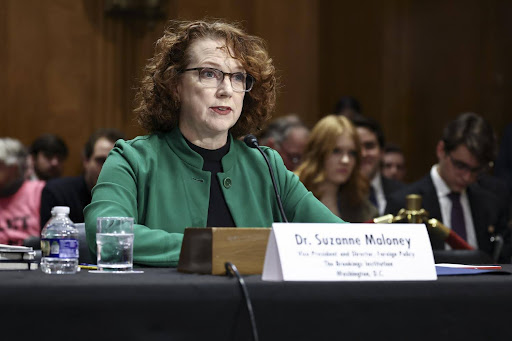
Suzanne Maloney – VP and director of Foreign Policy at the Brookings Institution
BROOKINGS | March 1, 2024
Chairman Cardin, Ranking Member Risch, and distinguished members, thank you for inviting me to contribute my views on the intensifying threats posed by Iran’s proxy network across the Middle East and how U.S. policy might counter these threats most effectively. It is an honor for me to address this committee.
The following is the last section of Mrs. Maloney’s 4700 word article:
The path forward on Iran and its proxy forces:
The Biden administration’s use of force against Iran’s proxies appears to be having a salutary effect on the crisis, with some early evidence that individual militias may have been weakened and that attacks emanating from Iraq have slowed and/or halted altogether.9 And more broadly, deterrence is working, at least in forestalling the eruption of a wider war. Still, the tenacity and adaptability of Iran’s various militias are prodigious and time-tested, and the weapons at their disposal are relatively plentiful and inexpensive, especially as compared to the costs entailed in shooting them down. So, Washington must remain vigilant.
But it is also clear that the use of force alone will not eliminate the threat posed by Tehran or its militia network, and overreach or overreliance on military instruments could undermine the ultimate objectives of U.S. policy in the region and elsewhere. Even a spectacular U.S. strike, such as the January 2020 assassination of Qods Force commander Qasem Soleimani along with a key Shiite militia leader in Iraq, has had relatively limited long-term impact on the strength, durability, or efficacy of Iran’s “axis of resistance.”
For Tehran, the prospective advantages of its regional aggression are huge. Iran doesn’t actually have to achieve anything; chaos and pressure on Israel and the United States will itself constitute a victory. By contrast, the stakes for American success are high. With their attacks, Iranian leaders seek to precipitate U.S. mistakes. Historically, its most valuable openings have come as a result of missteps by the United States and our regional partners, such as the 2003 U.S. invasion of Iraq and the 2018 withdrawal from the Joint Comprehensive Plan of Action.
Together with our regional partners, Washington must begin planning meticulously for the day after the war in Gaza. It will be critical to ensuring that civilian authorities that are independent of Hamas and other Iran-backed militias are resourced to undertake the reconstruction effort effectively and quickly. In the aftermath of the 2006 war in Lebanon, Iranian aid enabled Hezbollah to snatch victory from the jaws of defeat and outmaneuver the Lebanese government with almost instantaneous compensation and rebuilding programs.10 While U.S.-led diplomatic efforts to coalesce leaders in the Gulf around postwar plans for Gaza’s governance and reconstruction have been underway for some time, the obstacles to effective implementation remain staggeringly high.
In addition, the United States must craft and execute a new strategy that addresses the totality of the challenges Iran poses to its neighbors and the world. The assumptions underlying Obama-era diplomacy toward Tehran—a conviction that the Islamic Republic could be persuaded to accept pragmatic compromises that served its country’s interests—are no longer credible. Today’s Iranian leaders have assessed that the strategic landscape incentivizes a more aggressive posture and an embrace of the authoritarian alternatives to the West. In turn, they have reverted to the regime’s foundational premise, a determination to upend the regional order by any means necessary. We can contest and contain the Islamic Republic’s most dangerous policies, and in doing so create time and space for Iran’s century-old movement for representative democracy to gain strength.
This can and should be a bipartisan effort. The past decade has witnessed an immensely problematic polarization of the debate around Iran policy, both here in Washington and around the country. I’ve had the privilege to work with Republican and Democratic administrations on Iran, and there is substantial alignment around the nature of the Iranian threat and the most effective tools for countering Tehran’s malign policies among the American people and their representatives and leaders across both sides of the aisle. Unfortunately, it is also evident that the fierce disagreements in Washington have at times stymied opportunities to enhance our deterrence.
We need not do it alone, and the U.S. military response in the Red Sea is a reminder that investments in coalition building require time and energy to germinate and mature. But the crisis in the Middle East has laid bare several hard truths. Like it or not, the United States remains an indispensable player in the Middle East, despite a dubious track record of limited success in the region over the past several decades. However, no other world power can surge military and diplomatic capacity to help manage a spiraling conflict to avoid the worst outcomes. And even if Americans are weary of the military, economic, and human toll of our commitment there, standing by our allies—even when that requires a careful balance of support and restraint—and preserving access to the energy that, at least for now, remains vital to the world economy requires that commitment and readiness. Several American presidents have hoped to downsize our role in the Middle East on the cheap in order to focus on Russia’s urgent threat and China’s pacing challenge. Instead, Americans will have to generate the fortitude to lead on both, while also endeavoring to extinguish a dangerous fire in the Middle East and construct the diplomatic pathway that can enable the region to navigate toward a more peaceful and prosperous future.To read the whole article: http://surl.li/rywxn